Vibe Coding: The Shift from Syntax to Intent
Vibe coding moved the job from writing syntax to describing intent. Andrej Karpathy named it in 2025, and within a year it had changed who gets to build software at all.
For the full plain-English explanation — what it is, where it fails, and what to do about it — read What Is Vibe Coding? This post is the shorter, more technical take.
Why syntax became an implementation detail
For most of my career, a large share of development time went to things that had nothing to do with the product: build configuration, boilerplate, dependency resolution, and the long tail of small syntax errors. Modern models handle that layer natively. You describe the component you want and get a working implementation using current standards.
That is a real shift, and it is why the term caught on so quickly. The bottleneck moved from typing to deciding.
The workflow
- Specify intent. Describe what you want in human terms — the behaviour, the constraints, the edge cases.
- Model execution. The AI writes complete components, applying current patterns without being told to.
- Supervision. Instead of debugging syntax, you review architecture: does this fit the system, and will it hold up?
What the speed hides
Step three is where vibe coding and professional practice part company. Karpathy’s original description involved not reading the code — giving in to the vibes. That is fine for a prototype. In production it produces a specific failure pattern: nothing crashes, the site looks correct, and something is quietly broken.
I have hit this on my own properties. A contact form that validated correctly and never delivered a message. An agent that replaced an entire working design rather than editing it. Neither announced itself.
Where the line sits
The distinction Karpathy drew in 2026 is the useful one. Vibe coding raises the floor — anyone can build something. Agentic engineering protects the ceiling — what gets built stays worth owning. Same models, same speed. The difference is a written spec, reviewed changes, tests, and a named human who is accountable.
The result is a step change in velocity: a solo founder can build hybrid systems that used to require a team and a quarter. That is worth having. It is only worth keeping if someone is reading the output.
More: What Is Vibe Coding? · Agentic engineering in depth · The Build Standard
I Built a Free Scanner That Shows If Google’s AI Can See Your Business (Mine Failed)
Google just held a funeral for the 10 blue links, and most business owners didn’t get an invitation.
At I/O this year, Google announced the biggest change to the search box in 25 years. When your next customer asks Google’s AI Mode, ChatGPT, or Perplexity “who’s the best roofer near me” — the AI gives one answer. There’s no page two. There’s barely a page one. You’re either the answer, or you’re invisible.

So I built a scanner. Then I pointed it at my own site.
Twenty years of engineering pride, two years of vibe coding, and here’s what happened when I ran my own free AI Search Readiness Scanner against chrisslater.ai:
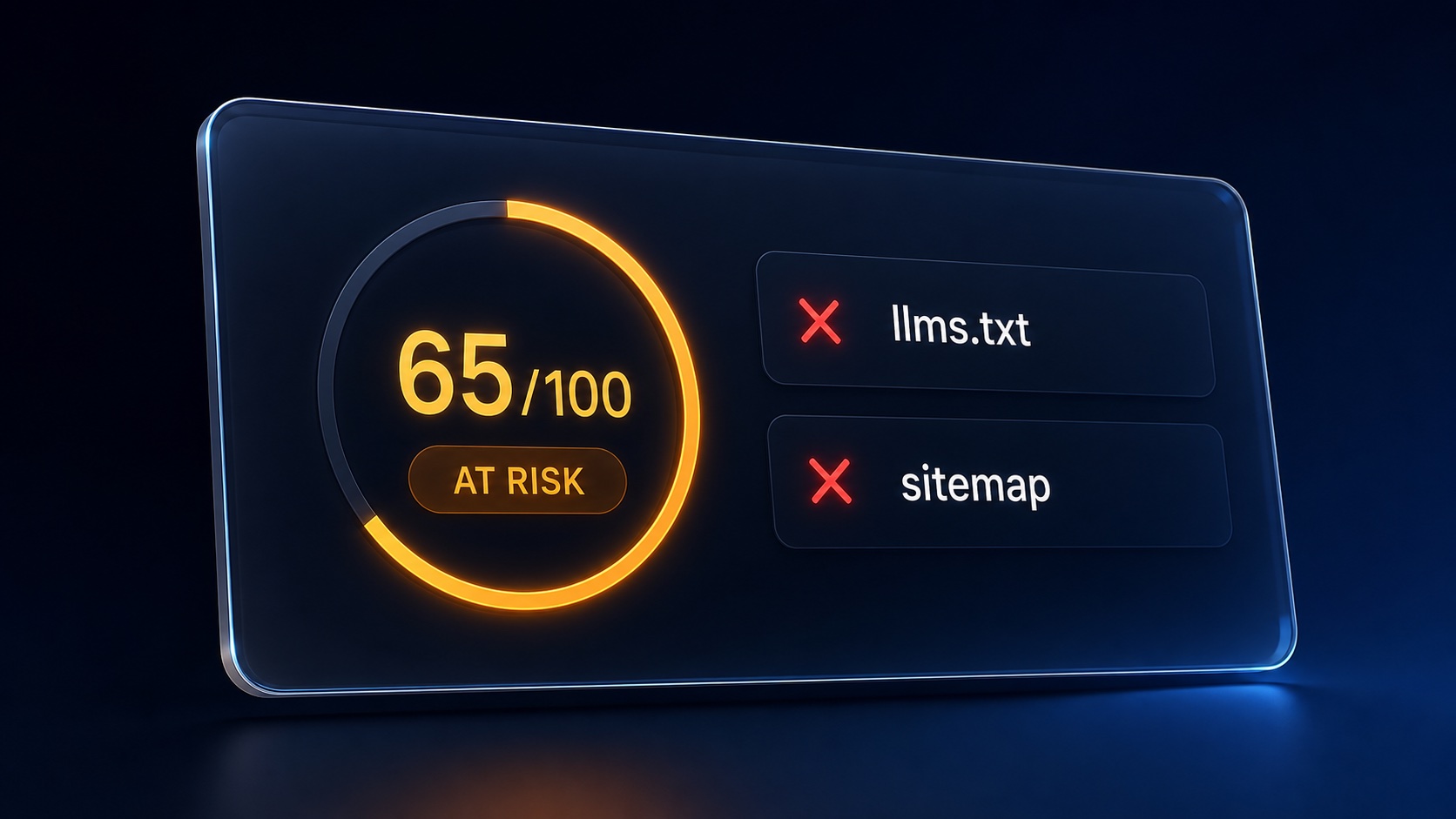
65 out of 100. “At Risk.”
No llms.txt. No sitemap. No business schema. My site — the site of a guy who literally sells AI visibility services — was semi-invisible to the machines deciding who gets recommended. I’m publishing that number because that’s the point: almost everyone is failing this test right now, and almost nobody knows it.
What the scanner actually checks (in 30 seconds, free, no email)
It reads your site the way an AI engine does and grades 12 signals in plain English:
- Can AI even get in? Some sites block GPTBot, ClaudeBot, and PerplexityBot in robots.txt without knowing it. That’s a self-inflicted disappearing act.
- Do you have an llms.txt? The new standard file that tells AI assistants who you are and why to recommend you. Most sites: no.
- Does AI know what your business IS? Structured data (schema) is how machines learn your name, location, and services. No schema = the AI is guessing.
- Do you answer questions? AI answers are stitched from Q&A content. Sites with no FAQ rarely get quoted.
- Can crawlers read your words? If your beautiful site loads everything with JavaScript, most AI crawlers see a blank page. One site in my own portfolio exposed just 120 words.
The uncomfortable truth about this moment
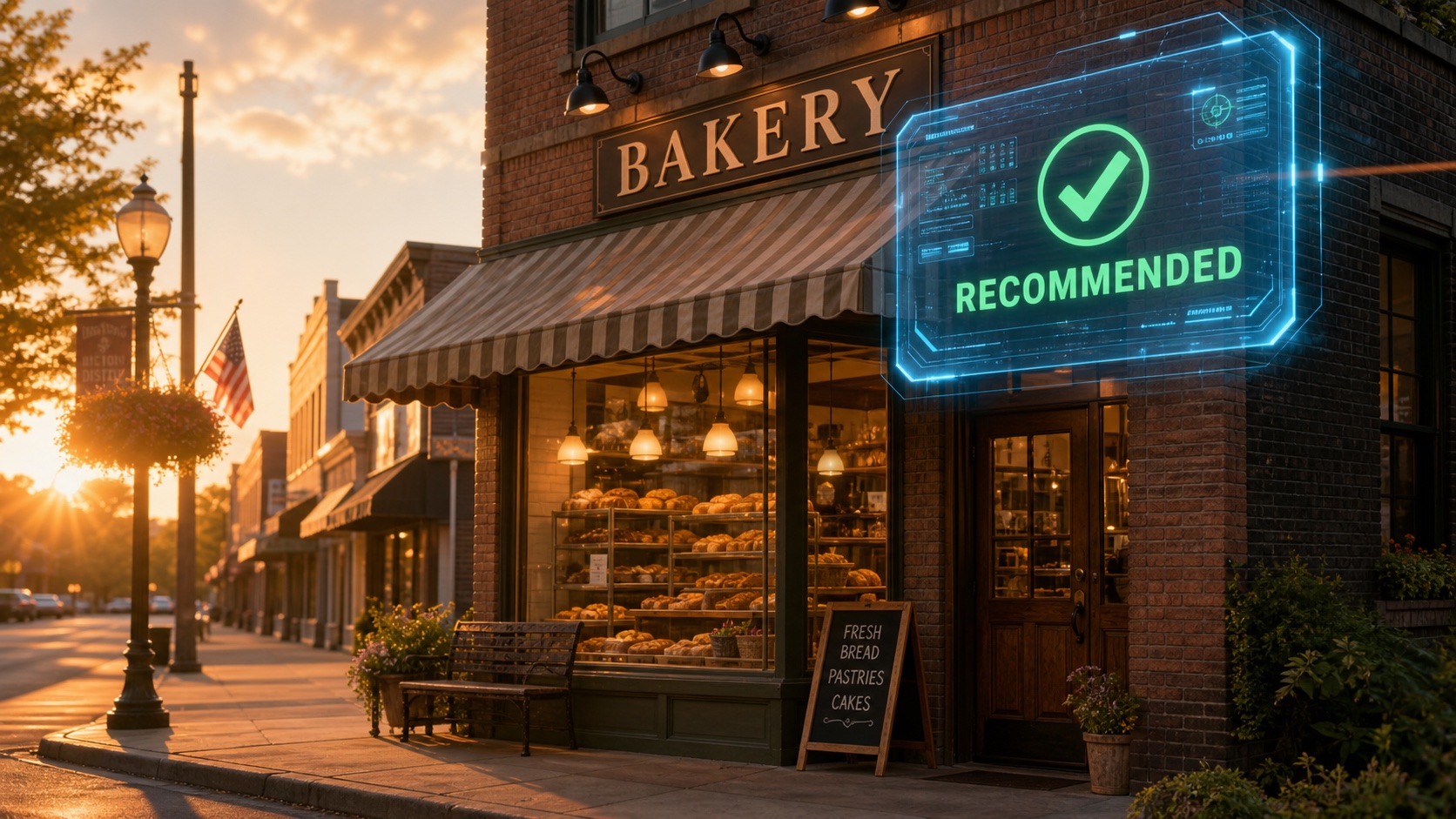
Here’s the part I care about, and the reason I don’t write pure-hype AI posts: this shift is going to quietly hurt a lot of good people. The bakery with the JavaScript menu. The contractor whose 15 years of reviews live on a site AI can’t parse. They did nothing wrong — the ground moved under them.
But the same shift is the biggest visibility opportunity since early Google. The fixes are not rocket science: a text file here, a schema block there, an FAQ page written in the words your customers actually use. The businesses that do this in the next six months get cited while their competitors vanish. Cited brands are already earning about 35% more clicks. This is a rare window where an afternoon of unglamorous work beats a decade of incumbency.
Run your scan. Right now. It’s free.
→ Scan your site free at the AI Search Readiness Scanner — 30 seconds, no signup, nothing stored.
If you score under 80, you have gaps costing you AI visibility today. Fix them yourself with the toolkit at All Clear Digital, or get the done-for-you audit at Lexington Digital.
As for me — I’m taking my own medicine. llms.txt, sitemap, and schema go live on this site this week. I’ll post the before/after score.